
About the team
Meet our team!
The NaPS project is created by an interdisciplinary group of researchers at Jagiellonian University.
We combine expertise in environmental epidemiology, psychology, geoinformatics and data science to better understand how the environment affects human sleep and health.
We are an open, collaborative and curious research group whose aim is not only to conduct studies and disseminate knowledge, but also to promote reliable and transparent science.
Iana Markevych
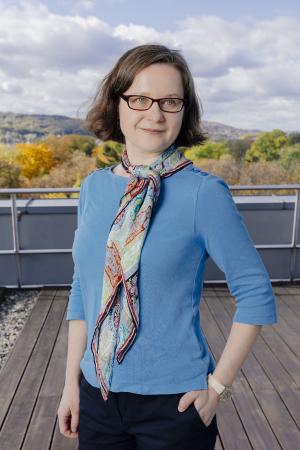
Dr hab. Iana Markevych is an Associate Professor at the Institute of Psychology, Jagiellonian University, Krakow, Poland. She is an ecologist (MSc) and environmental epidemiologist (MSc) by training. Since 2015, she holds a PhD degree in human biology from the Ludwig Maximilian University of Munich, Germany, for which she was granted an award for the best PhD dissertation in Epidemiology from the German Society for Medical Informatics, Biometry and Epidemiology. In 2022, she received a habilitation in biology from the Jagiellonian University and in 2024, she was granted a position of an Associate Professor.
Before coming to Krakow in 2019, Iana Markevych had been working at the Helmholtz Zentrum München and at the Ludwig Maximilian University of Munich, Germany, since 2012. During that time, she participated in the large EU-funded projects ESCAPE, TRANSPHORM, and ALEC. Currently, she is a co-principal investigator of the “NeuroSmog: Determining the Impact of Air Pollution on the Developing Brain” project funded by the Foundation for Polish Science (FNP). Additionally, she recently received a grant from the National Science Centre Poland (NCN) and became the sole principal investigator of her SONATA BIS “Nature, Pollution, and Sleep” (NaPS) project.
The research interests of Iana Markevych lie in the interdisciplinary field of “health and place”. In particular, she investigates the influences of exposure to nature and air pollution on cognitive outcomes, respiratory health, and allergic health, as well as their underlying mechanisms. Iana Markevych is an author of over 130 peer-reviewed publications. Since 2020, she has been consistently among the top 2% of the most cited and influential environmental scientists in the world according to the ranking of the Stanford University in collaboration with Elsevier.
Scientific profiles: Google Scholar, Scopus, Research Gate, ORCID
Maja Wierzba-Łukaszyk
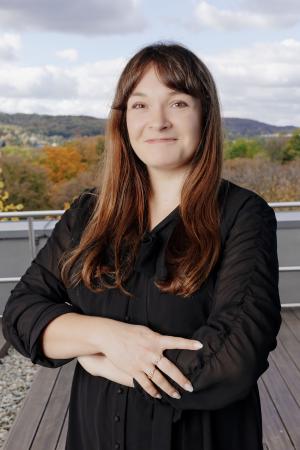
Maja Wierzba-Łukaszyk is a PhD candidate with a background in geophysics, geodesy, and data science. In the NaPS project, she applies her expertise in data engineering, signal processing, and geodesy, using accelerometer-based measurements and spatial data analysis to explore how environmental factors influence human sleep.
She began her career working on research vessels conducting marine seismics, where she analyzed geophysical data to better understand the geological structure of the Earth. At the Jagiellonian University, she coordinated data management in the NeuroSmog project — developing tools to support the research team, ensuring the security of sensitive information, and maintaining the reliability of research results.
Currently, as a data engineer and analyst, she designs cloud-based data pipelines that transform diverse information sources into reliable datasets and clear, insightful reports supporting data-driven decision-making.
Her research interests center on bridging scientific methodology with practical engineering, applying signal processing, statistics, and artificial intelligence to address complex real-world problems.
Scientific profiles: Research Gate, ORCID
Agnieszka Cieśla

Agnieszka Cieśla is a scholarship student in the SONATA BIS “Nature, Pollution, and Sleep” (NaPS) project, funded by the National Science Centre Poland (NCN), at the Institute of Psychology, Jagiellonian University, Krakow, Poland. She earned her bachelor’s degree in neurobiology at the Jagiellonian University and is currently pursuing a master’s degree in psychology at the same University. As part of her studies, she completed a semester abroad at the University of Valencia, Spain, within the Erasmus+ program.
Before joining the NaPS project, Agnieszka gained research experience in both Poland and abroad. At i-PsiTecLab at the University of Valencia, she was involved in projects combining virtual reality with emotional and physiological research, as well as ecological momentary assessment (EMA). She also collaborated with the Clinical Psychology Laboratory and C-Lab (Consciousness Lab) at the Jagiellonian University, where she participated in EEG studies and projects on interoception, emotion regulation, and repetitive body-focused behaviors. She is a co-author of a recent publication in the Journal of Psychiatric Research and was actively involved in organizing the Neuronus Neuroscience Forum 2024.
Her research interests lie at the intersection of neurobiology, psychology, psychopathology, and environmental science. She is particularly interested in how environmental exposures interact with mental health, sleep, and emotional processes.
Scientific profiles: Research Gate, ORCID
Ngoc Diep Le

Ngoc Diep Le (Lily) is a master’s student in Applied Psychology at the Jagiellonian University, Krakow, Poland. She is a three-time recipient of the Jagiellonian University Rector’s Scholarship for academic excellence. Additionally, she was awarded the Via Futuri Scholarship, granted to up to twenty university students annually. She currently holds the master’s scholarship position within the NCN-funded SONATA BIS “Nature, Pollution, and Sleep” (NaPS) project.
Prior to joining NaPS, she was actively involved in all stages of a metacognitive research project on the consequences of learning termination, funded by the University’s “Bratniak” Students’ and Alumni’s Foundation, and presented her team’s findings at the 12th European Conference on Education (London, UK). She has also contributed to an NCN-funded SONATA BIS project “Narcissism and Pro-Social Motivation”. Recently, she has published a literature review in the Annals of Psychology on potential reactivity of a key measure used in metamemory research – judgments of learning (JOLs).
Her research interests include cognitive psychology (metacognition, metamemory, learning strategies), social psychology, and environmental psychology, with particular focus on how environmental factors influence cognition and health. She is a strong advocate for open and reproducible science.
Scientific profiles: Research Gate, ORCID
Clemens Baumbach
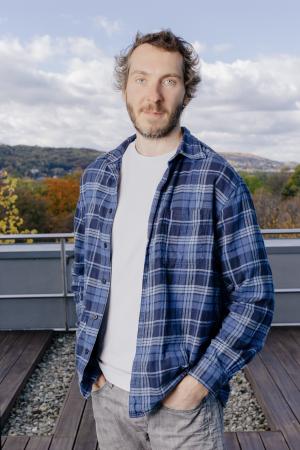
Clemens Baumbach is a programmer and data manager in the SONATA BIS “Nature, Pollution, and Sleep” (NaPS) project, funded by the National Science Centre Poland (NCN), at the Institute of Psychology, Jagiellonian University, Krakow, Poland. Since September 2023, he is also a PhD student at the Ludwig Maximilian University of Munich, Germany. He is an economist (MSc) and statistician (MSc) by training and a self-taught programmer. He has worked as a genetic epidemiologist at the University of Cambridge, UK and at the Helmholtz Zentrum München and the Ludwig Maximilian University of Munich, Germany. He has also worked for 5 years in a Munich start-up company as a lead programmer focused on geospatial analyses, among others.
Prior to NaPS, he was part of the “NeuroSmog: Determining the Impact of Air Pollution on the Developing Brain” project, funded by the Foundation for Polish Science (FNP), where he worked as a programmer and data manager and helped to design the study.
The research interests of Clemens Baumbach are various. He is interested in how environment shapes the human body and mind. He is also passionate about optimizing science and making it transparent, reproducible, and understandable to everyone. He is fully invested in technical aspects of data collection, data safety, data preprocessing, and data sharing in research. Clemens Baumbach is coauthor of over 30 peer-reviewed publications, including in Nature.
Scientific profiles: Scopus, Research Gate, ORCID